 In Stock
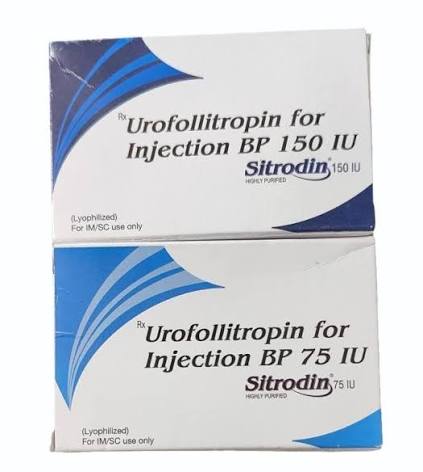
Urofollitropin For Injection
Urofollitropin For Injection is a fertility medicine containing follicle-stimulating hormone (FSH), used to stimulate ovarian follicle development and support ovulation in women undergoing fertility treatment.
Product Details
Urofollitropin For Injection contains urofollitropin, a purified form of follicle-stimulating hormone (FSH). It is used in assisted reproductive treatment to stimulate the development of ovarian follicles and support ovulation in women with certain fertility problems. It may also be used as part of controlled ovarian stimulation for procedures such as IVF under specialist supervision.
Key Benefits
- Stimulates the development of ovarian follicles
- Supports ovulation in women with certain ovulatory disorders
- Helps promote the growth of multiple follicles during assisted reproductive treatment
- May be used as part of controlled ovarian stimulation for IVF and related procedures
- Provides FSH activity required for follicular development
How It Works
Urofollitropin supplies follicle-stimulating hormone (FSH), which acts on the ovaries to promote the growth and development of ovarian follicles. As the follicles mature, they produce estrogen and may become capable of releasing an egg following appropriate medical stimulation.
Common Side Effects
- Headache
- Abdominal discomfort or pain
- Bloating
- Nausea
- Breast tenderness
- Injection-site pain or redness
- Mood changes
- Ovarian enlargement
Important Information
Urofollitropin For Injection should be administered under the supervision of a qualified fertility specialist. Ovarian response should be monitored regularly using ultrasound and, when appropriate, hormone testing. Treatment may increase the risk of ovarian hyperstimulation syndrome (OHSS), ovarian enlargement, and multiple pregnancy. It should not be used during pregnancy. Seek immediate medical attention for severe abdominal pain, rapid weight gain, significant bloating, difficulty breathing, or reduced urination, as these may indicate serious ovarian complications.