 In Stock
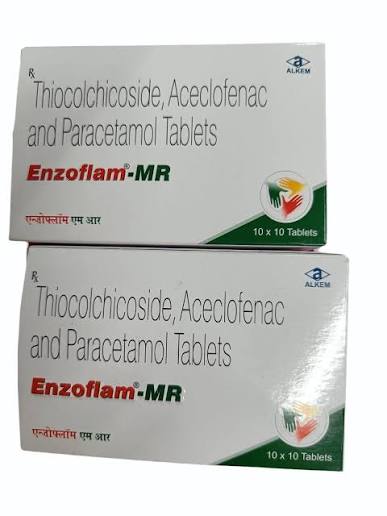
Thiocolchicoside, Aceclofenac Paracetamol Tablets
Thiocolchicoside, Aceclofenac Paracetamol Tablets are used to relieve pain, inflammation, and painful muscle spasms associated with acute musculoskeletal conditions.
Product Details
Thiocolchicoside, Aceclofenac Paracetamol Tablets contain a combination of a muscle relaxant, an NSAID, and an analgesic-antipyretic. This combination is used in the management of painful musculoskeletal conditions associated with muscle spasms, inflammation, and discomfort. It may help improve mobility and reduce pain when used under appropriate medical guidance.
Key Benefits
- Helps relieve musculoskeletal pain
- Reduces inflammation and swelling
- Helps relax painful muscle spasms
- Supports relief from muscle stiffness and discomfort
- May improve mobility affected by painful muscle conditions
How It Works
Thiocolchicoside acts on the central nervous system to help reduce excessive muscle activity and painful spasms. Aceclofenac inhibits the production of prostaglandins involved in pain and inflammation, while paracetamol provides additional analgesic and fever-reducing effects. Together, these ingredients provide complementary relief from pain, inflammation, and muscle spasm.
Common Side Effects
- Nausea
- Indigestion
- Stomach discomfort
- Diarrhea
- Dizziness
- Drowsiness
- Headache
- Increased risk of gastric irritation
Important Information
Thiocolchicoside, Aceclofenac Paracetamol Tablets should be used under the guidance of a qualified healthcare professional. Thiocolchicoside is generally intended for short-term use, and appropriate precautions are required in patients with a history of seizures. Aceclofenac may increase the risk of stomach ulcers, gastrointestinal bleeding, kidney problems, and cardiovascular complications. Avoid taking additional paracetamol-containing or NSAID medicines unless specifically advised. Avoid alcohol and use caution when driving if dizziness or drowsiness occurs. Seek medical attention for severe stomach pain, black stools, vomiting blood, breathing difficulty, severe skin reactions, or signs of an allergic reaction.